Brent: A Display Font That Anchors Your Story
It was a quiet Tuesday morning—coffee still warm, the first draft of my seasonal newsletter open in InDesign—and I paused. Not over wording or layout, but over voice. The tone had shifted: warmer, more intentional, grounded in craft rather than convenience. So I closed the default sans serif and opened Brent.
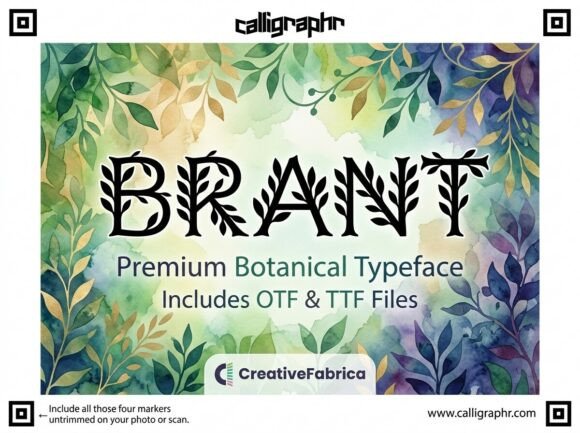
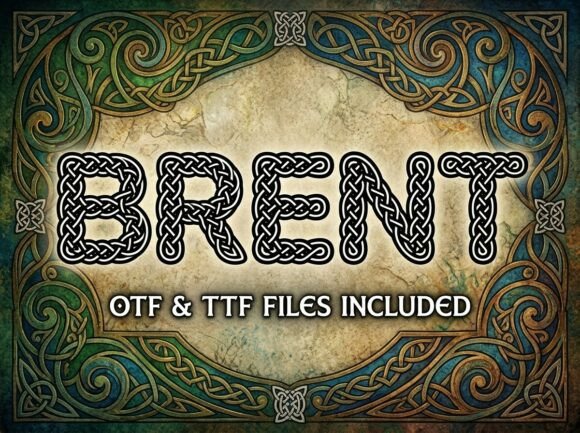
Brent isn’t just another decorative display font. It’s a typeface with presence—sculpted curves, confident contrast, and subtle asymmetry that feels hand-considered, not algorithmically generated. Its rhythm leans into pause and emphasis, like a thoughtful speaker leaning in before a meaningful phrase. There’s warmth in its terminals, strength in its vertical stress, and just enough irregularity to avoid sterility—without slipping into whimsy.
I used it first for the newsletter header: “Spring Slow Down,” set large over a soft watercolor wash. Instantly, the layout felt less like information delivery and more like an invitation. That’s Brent’s editorial magic—it doesn’t shout; it holds space. For a lifestyle blog redesign, it became the anchor for article titles, chapter openers in a digital magazine feature on mindful living, and even the title treatment inside a printable seasonal planner. Each time, it lent weight without heaviness, distinction without distraction.
What makes Brent especially valuable for creators is how clearly it defines hierarchy—not through size alone, but through personality. When paired with a calm serif like Adobe Garamond or a neutral sans like Inter for body copy, Brent becomes the visual equivalent of a well-placed pause in spoken language: it signals something worth attending to. In a recipe ebook, I set the dish name in Brent (at 48pt, tracking +50), then dropped into 16pt Georgia for ingredients and instructions. No bolding, no color shifts—just type contrast doing the work.
It’s equally at home in print and screen. Tested across PDF exports, mobile previews, and printed coaching workbooks, Brent retained its character at sizes as small as 24pt for section headings—though I wouldn’t recommend it below that for extended reading. Its x-height is generous, its counters open, and its letterforms remain legible even when rendered at lower resolutions. That said, it’s not built for paragraphs. Brent is a display font, and it knows its role: leading, framing, elevating—not carrying long-form text.
In practice, I’ve seen it shine most naturally in these moments:
- Blog headers and article titles, where it adds editorial polish without sacrificing approachability
- Ebook and course covers, lending handmade authenticity to digital learning assets
- Newsletter graphics and social media banners, where strong visual identity helps content stand out in crowded feeds
- Printable guides and wedding timelines, where elegance supports emotional resonance
- Pull quotes in editorial features, where its expressive forms echo the cadence of quoted voice
Font pairing matters deeply with a face like Brent. I tend to lean into restrained companions: a classic serif for narrative depth, or a clean, low-contrast sans for functional clarity. Avoid pairing it with other high-contrast or highly stylized fonts—the goal is harmony, not competition. One recent coaching workbook used Brent for module titles, then switched to Lora for reflective prompts and Open Sans for exercise instructions. The result? A clear typographic choreography—each voice distinct, none fighting for attention.
Before using Brent in client work or commercial templates, I always check what’s included: multiple weights (Light, Regular, Bold), true italics, discretionary ligatures, and stylistic alternates that add nuance—like a swash capital “B” for logo treatments or cover initials. It supports Latin-based languages comprehensively, and the OTF files export cleanly to PDFs, EPUBs, and web platforms via @font-face (with proper licensing). If you’re embedding it in a paid newsletter template or selling a printable planner bundle, confirm the license permits redistribution—most premium display fonts do, but terms vary.
There’s a quiet confidence in choosing Brent. It doesn’t chase trends. It doesn’t try to be everything. It simply offers a distinct, human-centered voice—one that says, “This matters,” without raising its volume. In a world saturated with generic sans serifs and overused scripts, Brent feels like finding the right phrase after searching for minutes: precise, resonant, and quietly unforgettable.
For the next issue of my digital magazine, I’m using it not just for the cover title—but for the drop cap on the opening essay. Just one letter, enlarged and centered, letting the rest of the page breathe around it. Because sometimes, the strongest statement a font can make is to let meaning settle in the silence it creates.