Elyse: A Display Font That Anchors Your Editorial Voice
It was a quiet Tuesday morning—coffee still warm, notebook open—and I was finalizing the cover layout for a new digital magazine feature on slow living. The article itself had been written with care: gentle pacing, thoughtful pauses, moments of quiet reflection. But the header font felt off. Too rigid. Too neutral. It didn’t hold the warmth or intentionality of the words beneath it. That’s when I opened Elyse.
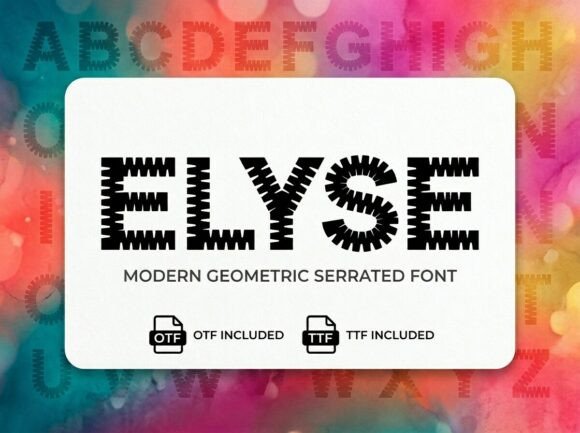
Elyse isn’t just another decorative display font. It carries presence—not loudness, but grounded confidence. Its letterforms balance delicate curves with subtle structural weight: a soft swell in the uppercase A, a graceful taper in the lowercase y, a quiet rhythm that feels both intentional and unhurried. There’s no forced whimsy here, no exaggerated flair that distracts. Instead, Elyse offers artistic integrity—a typeface designed to be seen, remembered, and felt as part of the story.
I used it first for the feature title: “Where Time Slows Down.” Set large over a muted linen texture, Elyse held space without shouting. It invited the eye in, then lingered—just long enough to set the tone before the reader moved into the body text. That’s its editorial superpower: it doesn’t compete with content; it frames it.
Elyse shines brightest where attention matters most—blog headers, ebook covers, newsletter banners, chapter openers, and printable guide titles. In a recipe ebook, it gives a handmade, inviting quality to dish names like “Honey-Roasted Figs & Thyme” without veering into cliché script territory. In a wedding guide, it lends elegance to section headings like “The First Look” or “Vows & Variations”—refined, personal, never generic. For a coaching workbook, Elyse adds quiet authority to prompts like “What Feels True Right Now?”—a visual cue that this space is meant for reflection, not rushing.
It’s important to say what Elyse isn’t: it’s not intended for long-form reading. You wouldn’t set paragraphs or captions in it—not even at small sizes. Its strength lies in hierarchy: commanding attention at larger sizes (24pt and up), guiding the reader’s eye with clarity and calm. On screen, it renders cleanly across modern browsers and email clients when embedded properly. In PDFs and print-ready files, it holds its shape beautifully—no pixelation, no awkward spacing—especially when exported with outlined glyphs or embedded fonts.
Pairing Elyse thoughtfully makes all the difference. I’ve found it harmonizes especially well with warm, readable serif fonts—think a gentle Garamond or a contemporary Tisa—set at 16–18pt for body copy. For digital newsletters or web layouts, a clean, humanist sans serif like Inter or Lora works gracefully alongside it: Elyse for the headline, the sans for subheads and navigation, the serif for the main text. That triad creates breathing room, contrast, and continuity—all essential for sustained reading.
Before committing to Elyse in a client project or commercial download, I always check what’s included. Does it offer stylistic alternates? (Yes—several elegant variants for the uppercase S and E.) Are there ligatures that enhance flow in longer titles? (A few subtle, tasteful ones—ideal for pairing words like “slow” and “living” without crowding.) What weights are available? (One strong, carefully tuned weight—perfect for display use, no need for bold or light variants that dilute its character.) Is multilingual support built in? (Basic Latin extended—covers English, French, Spanish, German, and Scandinavian languages comfortably.) And critically: is the license clear for my use case? (Yes—it permits use in ebooks, templates, printables, and client work, with no restrictions on distribution or resale of end products.)
For creators who design their own newsletters, publish seasonal guides, or craft printable planners, Elyse becomes more than a font choice—it becomes part of the brand’s quiet signature. In a weekly wellness newsletter, it transforms “This Week’s Intention” from functional to meaningful. In a minimalist printable planner, it turns “Monthly Focus” into a moment of pause. Even in social media graphics—where clarity and speed matter—it performs with grace: legible at thumbnail size, expressive at full width.
There’s something reassuring about working with a display font that doesn’t ask you to compromise. Elyse doesn’t demand attention through noise or novelty. It earns it—through balance, consistency, and a kind of visual honesty. When I used it for a digital magazine’s seasonal cover series, readers began commenting—not on the font itself, but on how each issue “felt like coming home.” That’s the mark of successful editorial typography: it disappears just enough to let meaning breathe, yet stays vividly present in memory.
If you’re redesigning a blog header, crafting an ebook title page, or building a course PDF that balances beauty with clarity, Elyse offers something rare: a premium font that supports intention rather than overshadowing it. It’s not flashy. It’s focused. Not trendy—timeful. And in a landscape crowded with fast-moving design trends, that kind of quiet confidence is exactly what thoughtful publishing needs.
Typography, at its best, is stewardship—of voice, of time, of attention. With Elyse, you’re not just choosing a typeface. You’re choosing how your readers begin their journey with you. And sometimes, that first impression is the gentlest, most lasting one of all.