Cerys: A Friendly Display Font for Editorial Design
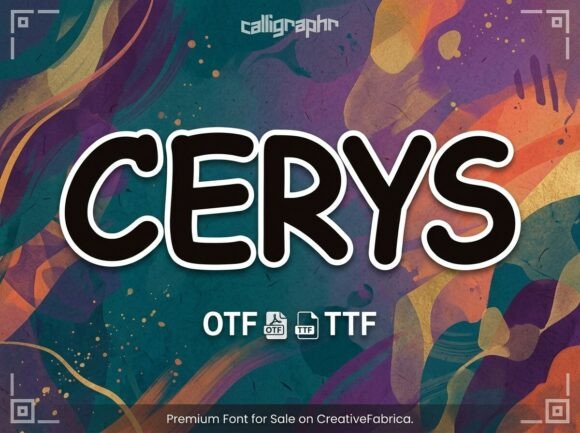
When you’re designing a blog header, crafting a magazine cover, or setting the tone for an ebook title page, the right display font does more than look good—it signals intention. Cerys is one of those rare display fonts that balances warmth and clarity without sacrificing visual impact. As a friendly display sans-serif, it carries a modern-and-approachable soul—ideal for creators who want their typography to feel human, intentional, and quietly confident.
What makes Cerys stand out in editorial work isn’t just its roundness or thickness—it’s how those qualities serve readability and mood. Its thick, monolinear letterforms create consistent weight across characters, while perfectly round terminals soften edges without blurring distinction. That means headlines remain legible at small sizes on mobile, yet scale beautifully on print covers or large-format social graphics. It doesn’t shout; it invites.
Where Cerys Fits Best in Your Layouts
Cerys shines where attention needs direction—not sustained reading. It’s not built for long-form body copy, but it excels in moments that shape reader experience: article headers, chapter openers, pull quotes, newsletter banners, and printable guide titles. Think of it as your editorial punctuation: a visual pause that says, “This matters.”
In a lifestyle blog, Cerys works well for section headers like “Weekend Rituals” or “Simple Pantry Swaps”—short phrases with quiet confidence. In a recipe ebook, it sets the tone on chapter dividers (“Spring Greens,” “Slow-Simmered Sauces”) before handing off to a warm serif body font. For a wedding planning guide, Cerys adds gentle authority to headings like “Your Timeline, Simplified” or “Vendor Checklist”—friendly enough for couples, professional enough for planners.
It also supports consistency across formats. Use Cerys for your newsletter banner graphic, then echo it in your ebook cover and printable worksheet headers. That repetition builds brand recognition—not through logos or colors alone, but through typographic rhythm. Readers begin to associate that soft roundness with your voice, your pace, your values.
Pairing Cerys Thoughtfully
Like any strong display font, Cerys gains strength through contrast. Pair it with a highly readable serif—such as EB Garamond, Merriweather, or Source Serif Pro—for body text in magazines or ebooks. The warmth of Cerys’ curves complements the structured elegance of serif letterforms, creating hierarchy without tension.
For digital-first newsletters or web-based guides, pair Cerys with a clean, neutral sans serif—like Inter, Lato, or Work Sans—for captions, navigation, and supporting text. That keeps interfaces airy and accessible while letting Cerys anchor key messages. Avoid pairing it with other round, monolinear fonts; similarity dilutes impact. And steer clear of overly decorative script or handwritten fonts unless you’re aiming for deliberate contrast in a single accent element (e.g., a hand-lettered subhead beneath a bold Cerys title).
Practical Considerations Across Formats
Cerys renders cleanly across devices. Its generous x-height and open counters support screen legibility—even on lower-resolution mobile displays. In PDF exports for ebooks or printable planners, it holds weight without pixelation, especially when embedded properly. For print materials like wedding guides or coaching workbooks, its monolinear structure ensures crisp output at high DPI, with no risk of hairline gaps or uneven ink coverage.
Check what styles are included: most premium versions offer Regular and Bold weights, plus optional alternates or ligatures that add subtle character to titles without compromising clarity. If your audience includes multilingual readers, verify whether Cerys supports extended Latin characters—essential for names, accents, and international editions of newsletters or digital magazines.
Using Cerys With Integrity—and Licensing
As a creator, you’ll want to use Cerys where it adds value—not just decoration. That means applying it intentionally: in cover typography, not body paragraphs; in quote graphics, not footnotes; in branded templates, not system UI elements. It’s a display font, not a utility font—and honoring that distinction keeps your layouts focused and respectful of reader attention.
Remember: commercial licensing matters. If you’re bundling Cerys into a paid ebook, selling printable planners, distributing branded newsletter templates, or delivering design assets to clients, confirm the license permits those uses. Most reputable foundries offer clear tiers—desktop, web, app, and extended licenses—so choose the one that matches how and where your audience engages with your content.
More Than Aesthetic—A Tone Setter
Typography shapes perception before a single word is read. Cerys doesn’t project austerity or irony. It doesn’t lean into minimalism or nostalgia. Instead, it offers grounded friendliness—a quality increasingly rare in digital spaces saturated with either cold efficiency or performative whimsy.
That makes it especially useful for creators building independent brands: coaches offering calm, evidence-based guidance; educators designing accessible learning kits; indie publishers launching literary magazines with emotional resonance. In each case, Cerys becomes part of the promise—not just “this looks nice,” but “this feels safe to read,” “this respects your time,” “this was made with care.”
Try it on your next lead magnet title. Set it over a muted background in your next Instagram quote graphic. Use it to introduce a new series in your newsletter. You’ll notice how quickly it shifts the temperature of the space—not by being louder, but by being warmer, clearer, and more consistently itself.
Because great editorial design isn’t about filling space. It’s about shaping attention, guiding emotion, and honoring the reader’s presence—word by word, line by line, and yes, letter by letter.