Black Chunky: A Display Font That Anchors With Quiet Confidence
It was a Tuesday afternoon—coffee lukewarm, the newsletter layout half-finished—and I found myself staring at the header graphic for a new seasonal guide: Simple Summer Rituals. The draft used a sleek, minimalist sans serif, but something felt off. Not wrong, exactly—just unmoored. The content was warm, tactile, grounded in small joys: morning light through kitchen windows, handwritten notes on recycled paper, slow-brewed iced tea. The font didn’t speak that language. So I reached for Black Chunky.
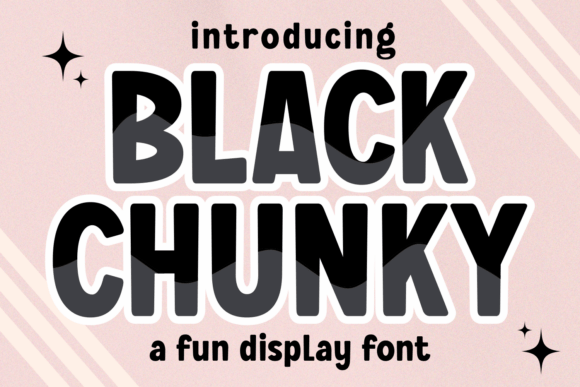
What arrived wasn’t just another bold typeface—it was a presence. Black Chunky is a premium display font built from generous proportions and soft, rounded corners. Its letterforms are ultra-heavy, yes—but never aggressive. There’s no sharpness, no tension. Instead, there’s a gentle mass, like well-worn river stones stacked with intention. It doesn’t shout; it settles. And in that settling, it creates space—not visual noise, but visual gravity.
Where It Finds Its Rhythm in Real Layouts
I tested Black Chunky across several formats: a digital magazine cover, a printable coaching workbook, a recipe ebook title page, and a set of Instagram story graphics for a lifestyle blog. In every case, it performed best when given room to breathe—large sizes, generous line spacing, minimal surrounding elements. On the Simple Summer Rituals newsletter header, it sat alone above a single line of body copy set in a warm, readable serif. No embellishment. No shadow. Just Black Chunky in all-caps at 48pt, tracking slightly open. Instantly, the tone shifted: calm, intentional, quietly authoritative.
It shines in chapter openers and section headings where editorial mood matters more than speed of scanning. In the coaching workbook, it anchored each weekly reflection prompt—“What felt full this week?”—with a sense of weight and invitation. Readers paused. Not because the text was hard to read, but because the shape of the letters invited pause. That’s rare in display fonts, which often lean into energy or irony. Black Chunky leans into stillness.
Readability, Responsiveness, and Real Limits
Let’s be clear: Black Chunky is not for body copy. Nor for captions under 14pt, dense PDF footnotes, or mobile navigation menus. Its strength lies in its singularity—not versatility. At smaller sizes, the soft corners blur slightly on low-resolution screens, and tight tracking can make letterforms merge. But at 32pt and up—especially in print or high-DPI exports—it holds crispness beautifully. I ran test PDFs for the recipe ebook: titles in Black Chunky, ingredient lists in a clean, open sans serif. The contrast worked precisely because each typeface stayed within its lane.
On mobile, it performs best as a hero element—cover text, banner headline, or pull quote in a long-form editorial feature. I avoided using it for inline emphasis or small callouts. It’s not a utility player; it’s the anchor point. And anchors aren’t meant to be everywhere—they’re meant to hold one thing steady so everything else can move with clarity.
Pairing With Purpose
Black Chunky pairs effortlessly with typefaces that offer contrast without competition. Think a relaxed serif like Merriweather or a friendly humanist sans like Poppins or Lato. What works is balance: mass against air, roundness against structure, presence against neutrality. In the wedding guide layout I reviewed, Black Chunky introduced each chapter (“The First Look,” “Evening Toasts”) while body text flowed in a delicate Garamond revival—soft but precise, traditional but not stiff. The pairing didn’t feel curated; it felt inevitable.
Avoid pairing it with other heavy display fonts, script fonts, or anything with strong personality. It doesn’t need harmony through similarity—it needs contrast through function. Also worth noting: check the included styles before licensing. Black Chunky comes with standard OpenType features—ligatures, stylistic alternates, and basic multilingual support (Latin Extended-A)—but no italics or condensed variants. If your project needs nuanced typographic hierarchy beyond bold/regular, plan accordingly.
When It Becomes Part of the Voice
What surprised me most wasn’t how Black Chunky looked—but how it changed my editing rhythm. When the title of a worksheet read “Your Calm Checklist” in Black Chunky, I found myself rewriting the supporting text to match its quiet confidence. Sentences shortened. Adjectives softened. The voice became less instructional, more companionable. That’s the subtle power of a well-chosen display font: it doesn’t just dress the content—it helps shape it.
For creators building a consistent brand—whether through a monthly newsletter, a series of printable planners, or a digital magazine—the right display font becomes part of the editorial contract with readers. Black Chunky signals: This space is held. This moment matters. You can land here. It’s not flashy. It’s not trendy. It’s simply, solidly, thoughtfully present.
If you’re choosing a font for a cover, a chapter opener, a workshop title, or a signature pull quote—and you value warmth over wit, clarity over cleverness, and presence over prominence—Black Chunky earns its place not as decoration, but as design intention made visible.