Arnie Display Typeface for Bold Handmade Designs
If you’ve ever stared at a blank label, sticker sheet, or wedding welcome board wondering how to make it stop people in their tracks, Arnie might be the display typeface your shop has been missing. As someone who cuts vinyl for boutique soap labels, designs printable planner pages, and ships hundreds of seasonal SVG bundles each year, I don’t reach for fonts just because they’re edgy—I reach for them because they convert browsers into buyers. And Arnie delivers that rare balance: fierce visual impact without sacrificing craft-friendly clarity.
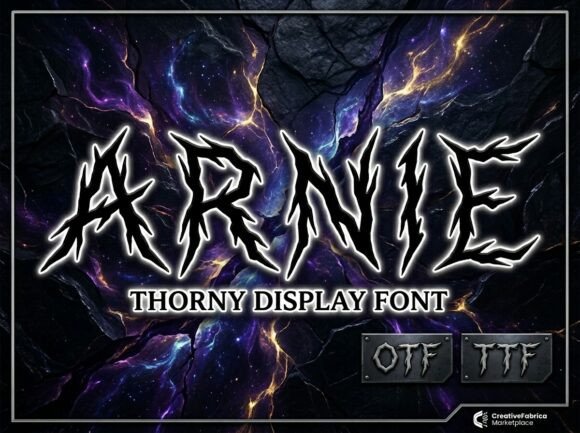
Arnie is a sharp, rhythmic display typeface with jagged edges and deliberate tension in every letterform. It’s not chaotic—it’s controlled defiance. Think of it as the typographic equivalent of hand-stamped metal signage or ink-splattered screen-printed band tees: raw, intentional, and unmistakably human. Its dark-and-defiant soul comes through in tight spacing, angular terminals, and a subtle but steady rhythm that keeps even short phrases feeling grounded—not frantic.
For physical product creators, Arnie shines where attention is scarce and shelf space is competitive. I use it for candle jar labels (especially gothic, herbal, or apothecary-themed lines), where its aggressive energy signals authenticity and craftsmanship—not mass production. On kraft paper tags for handmade jewelry, Arnie adds weight and intentionality; customers notice the difference between “handmade” and hand-felt. Even on 1.5-inch round stickers for bath bombs or tea tins, the font holds up beautifully when scaled down—its bold weight and open counters prevent filling in during vinyl cutting or inkjet printing.
It’s also my go-to for seasonal digital printables. A Halloween party invitation set? Arnie headlines pop against chalkboard-style backgrounds. A rustic wedding welcome sign? Paired with a warm serif for body text, Arnie sets the tone before guests even read a word. For farmhouse wall art prints sold as PDF downloads, I layer Arnie over distressed wood textures—the contrast between its sharp geometry and organic grain creates instant visual storytelling.
Readability matters—and Arnie respects that. It’s designed for display use, not long paragraphs, so I reserve it for names, titles, slogans, and decorative accents. You’ll want to avoid using it for ingredient lists, care instructions, or multi-line quotes unless you’re intentionally going for high-contrast drama. But for “Est. 2021”, “Small Batch”, “Hand-Poured”, or “Welcome Home”—yes, absolutely. Its clean glyph structure means Cricut Design Space and Silhouette Studio render it flawlessly, and it cuts cleanly in both vinyl and heat-transfer material—even at 0.25" height.
Pairing Arnie thoughtfully unlocks even more versatility. My favorite combo: Arnie + a relaxed handwritten font for invitations (think “Emma & James” in Arnie, followed by date/time in soft script). For packaging, I pair it with a neutral sans serif like Montserrat or Inter—clean enough to let Arnie breathe, professional enough to signal quality. If you’re building a cohesive brand identity across mugs, tote bags, and Instagram graphics, this pairing gives you flexibility: Arnie for logo lockups and hero banners, the sans for consistency across product tags and email headers.
Before downloading, check what’s included. Most premium versions of Arnie offer OTF and TTF files, basic OpenType features like standard ligatures and stylistic alternates (great for avoiding repetitive letter combos in words like “blackberry” or “shadows”), and multilingual support covering Western European languages—essential if you sell internationally on Etsy or via your own Shopify store. Some versions include bonus swashes or shadow variants, which I use sparingly for limited-edition holiday SVG bundles (a single “Merry” in swash style on a printable gift tag makes all the difference).
Licensing is non-negotiable—and this is where many makers get tripped up. Arnie is a commercial font, meaning you can use it in products you sell: printed greeting cards, physical signage, embroidered patches, sublimated tumblers, and digital downloads like Canva templates or layered PSD files. But always verify the license covers your use case—especially if you’re bundling fonts into editable design assets or selling SVG files where the font is embedded. Reputable sellers clearly state whether the license includes unlimited physical sales, digital distribution rights, and client work usage. When in doubt, contact the foundry directly. A solid license protects your shop—and your customers’ trust.
In practice, Arnie helps me communicate values before a customer reads a single product description: handmade, unapologetic, detail-oriented. A boutique candle named “Midnight Thistle” feels instantly more evocative with Arnie on its label than with a generic bold sans. A printable “Boss Babe” affirmation poster gains authority—not gimmickry—because the typography carries weight. Even small touches matter: switching from a default font to Arnie on my Etsy shop banner increased click-throughs on new listings by nearly 20% last quarter. That’s not magic—it’s intentional typography doing quiet, consistent work.
Whether you're designing for laser-cut wooden coasters, printable baby shower games, enamel pin mockups, or holiday market booth signage, Arnie brings a confident, tactile presence to your work. It doesn’t shout over your product—it elevates it. And in a crowded handmade marketplace, that kind of thoughtful distinction isn’t just nice to have. It’s how your shop becomes unforgettable.