Anjou: A Display Typeface That Anchors Your Campaigns
It’s 3:47 p.m. on launch day for a new online course series — the kind built around seasonal rhythms and mindful productivity. I’m tweaking the final Instagram carousel post: a soft earth-toned background, a subtle texture overlay, and a headline that needs to land in under two seconds. I try three fonts. One feels too clinical. Another leans too playful. Then I drop in Anjou. Instantly, the headline breathes — warm, grounded, quietly confident. Not loud, but impossible to scroll past.
What Anjou Actually Feels Like in Motion
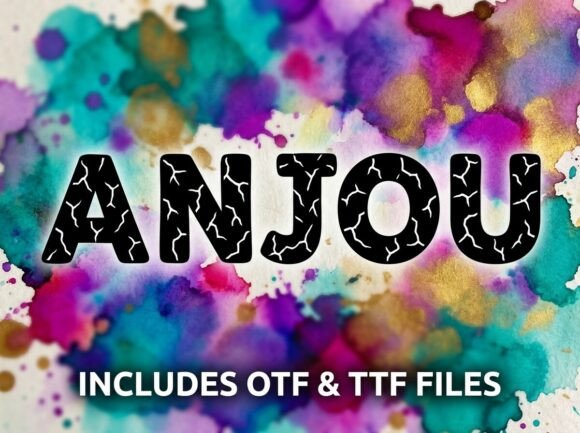
Anjou is a display typeface with generous, rounded letterforms that carry weight without heaviness. It’s not “friendly” in a bubbly way — it’s grounded. Think hand-carved woodblock, sun-warmed clay, or stone smoothed by time. The rhythm comes from its consistent stroke contrast and gentle swelling at terminals — not dramatic serifs, but organic pauses that guide the eye naturally. It doesn’t shout “look at me.” It says, “this matters — and so do you.”
In campaign use, that translates to immediate tonal clarity. When paired with a clean sans serif (like Inter, Poppins, or even a restrained Helvetica Neue), Anjou becomes the quiet anchor — the voice that introduces, names, or invites. It works best where emotional resonance matters more than exhaustive explanation: webinar banners, YouTube thumbnail titles, Pinterest quote pins, email header graphics, and Instagram story covers.
Where It Shines — and Where It Steps Back
Anjou thrives in short-form, high-impact contexts:
- Sale announcements: “Spring Refresh” or “Early Access” in Anjou over a linen-textured background reads as intentional, not urgent — perfect for brands that value calm confidence over flash.
- Course or content series titles: “Rooted Writing,” “The Slow Launch,” “Gather & Grow” — each benefits from Anjou’s natural cadence and tactile presence.
- YouTube thumbnails: At 120px tall, its massive x-height and open counters hold up surprisingly well — especially when placed over muted gradients or soft-focus imagery. Just avoid thin white strokes on light backgrounds; go bold or use a subtle drop shadow for contrast.
- Instagram Reels covers: Its rounded forms scale cleanly down to mobile preview size, and the rhythm helps text feel dynamic even when static.
- Branded template packs: As a primary display font in Canva or Figma kits, Anjou gives consistency without rigidity — ideal for creators building cohesive yet adaptable visual systems.
That said, Anjou isn’t built for long paragraphs, dense pricing tables, or formal investor decks. Its personality is too distinct for neutral information delivery. And while it’s highly legible at 24pt and above, don’t push it below 18pt on mobile — especially over busy backgrounds or low-contrast color combos. Test early in actual feed previews, not just your design canvas.
Pairing It Right — No Guesswork Needed
Anjou pairs most intuitively with humanist sans serifs: think Inter for digital clarity, Manrope for friendly modernity, or Clash Grotesk for subtle editorial polish. Avoid ultra-thin or geometric sans fonts (like Montserrat Light or Futura) — their rigidity clashes with Anjou’s organic pulse. A warm serif like Cormorant Garamond can work beautifully for print-leaning assets (e.g., webinar PDFs or printable worksheets), but keep it reserved for body copy — never as a direct counterpart to Anjou in the same headline.
If you’re layering in a script or handwritten font for accents (say, a tagline or signature), choose one with similar warmth and moderate contrast — nothing overly ornate or spindly. Anjou doesn’t need competition; it needs harmony.
Practical Checks Before You Commit
Before dropping Anjou into client work, ads, or digital products, verify a few things:
- Styles & weights: Does the package include at least Regular and Bold? Some versions offer subtle alternates — useful for avoiding repetition in multi-slide campaigns.
- Ligatures & OpenType features: Not essential, but optional ligatures (like “fi” or “fl”) add polish in logo-style treatments or short branded phrases.
- File formats: Ensure you have both .OTF and .WOFF2 if using on websites — and confirm EOT or SVG support if targeting older platforms.
- Licensing: Double-check commercial use rights — especially for digital ads, client-branded templates, merchandise, or SaaS dashboard integrations. Some licenses restrict redistribution or require extended coverage for large teams.
- Language support: If your audience includes Spanish, French, or Portuguese speakers, confirm diacritics and accented characters render cleanly — Anjou handles basic Latin well, but extended glyphs vary by version.
One last note: Anjou doesn’t solve brand strategy. But when your message is about presence, patience, or purpose — not speed, scale, or scarcity — it becomes a quiet strategic advantage. It reminds viewers that design choices aren’t just aesthetic. They’re tonal cues. Emotional waypoints. The first sentence of your campaign’s story — before a single word is read.