Ribbon Valentine: A Handwritten Display Font with Editorial Warmth
It was a quiet Tuesday afternoon—coffee cooling beside my laptop, the latest issue of a digital lifestyle magazine open in InDesign—when I paused at the cover layout. The headline needed more than clarity; it needed warmth, personality, and a gentle sense of invitation. Not theatrical, not fussy—just human. That’s when I reached for Ribbon Valentine. Within minutes, the title bloomed: soft curves, rhythmic spacing, and that unmistakable handwritten ease that feels like a thoughtful note slipped into a reader’s hand.
A Typeface That Breathes With Your Content
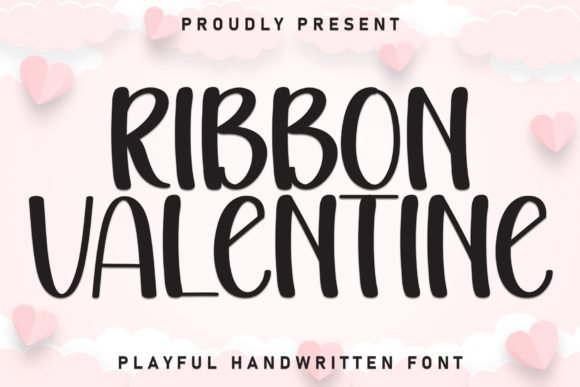
Ribbon Valentine is a premium display font—designed not for paragraphs, but for moments of emphasis and emotional resonance. Its letterforms carry subtle bounce and variation, echoing natural pen strokes without sacrificing legibility. There’s no forced quirkiness here; instead, you’ll notice a consistent baseline rhythm, generous x-height, and open counters that hold up beautifully at medium sizes—even on screens. It reads as friendly but never childish, expressive but never distracting. That balance makes it especially effective in editorial contexts where tone matters as much as information.
Where It Finds Its Rhythm in Real Layouts
I’ve tested Ribbon Valentine across several real-world publishing projects: a seasonal recipe ebook, a wedding planning workbook, and a bi-monthly creator newsletter. In each case, it anchored the visual hierarchy—not by shouting, but by leaning in.
- Blog headers and article titles: Paired with a warm serif (like Merriweather or Cormorant Garamond), Ribbon Valentine adds approachability without undermining authority. It works especially well for personal essays, reflective lifestyle posts, or slow-living themes.
- Ebook and course covers: On PDF exports, its outlines render cleanly at high resolution. For a coaching workbook titled *Gentle Beginnings*, it softened the perceived weight of the subject while still feeling intentional and polished.
- Pull quotes and chapter openers: Its slight irregularity gives breathing room to dense text blocks—ideal for printables or long-form features where you want readers to pause and absorb.
- Newsletter graphics and social media banners: At 48–72pt, it retains charm on mobile previews. Just avoid using it below 24pt for screen reading—it’s not built for fine detail at small sizes.
What It Doesn’t Do (and Why That Matters)
Ribbon Valentine isn’t meant for body copy. Its expressive nature—those delicate entry/exit strokes, the nuanced contrast between thick and thin—softens readability in extended passages. Nor does it suit formal reports, legal disclaimers, or data-heavy infographics where neutrality and precision are priorities. It also lacks extensive language support beyond basic Latin characters, so multilingual publications should verify coverage before committing. And while it includes standard OpenType features—ligatures, stylistic alternates, and a full set of numerals—it doesn’t offer multiple weights. That means it shines brightest as a singular voice: confident, consistent, and intentionally restrained.
Pairing With Purpose
Successful editorial design often lives in the conversation between typefaces—and Ribbon Valentine is an excellent listener. For body text, I lean toward readable serifs (e.g., Lora or PT Serif) that echo its warmth without competing. For captions, navigation, or sidebar notes, a clean, neutral sans serif like Inter or Source Sans Pro provides grounded contrast. What makes the pairing work isn’t just visual harmony, but functional clarity: Ribbon Valentine sets the mood; the supporting type carries the message. In a printable planner, for example, it introduces section headers (“Morning Pages,” “Gratitude List”) while a crisp sans handles checkboxes, dates, and prompts—each doing what it does best.
Practical Considerations Before You Use It
Before embedding Ribbon Valentine in client work, templates, or paid digital products, always check licensing terms. Most commercial licenses cover web use, desktop design, and PDF export—but usage in SaaS platforms, editable Canva templates, or embedded apps may require extended rights. File formats typically include OTF and WOFF2, making it compatible with modern design tools and web workflows. If you’re building a brand identity system, test how it scales across mediums: does it retain character in a printed wedding guide? Does it load smoothly in a newsletter header? Does it feel cohesive alongside your logo and color palette? These aren’t theoretical questions—they’re the quiet decisions that shape how readers experience your content over time.
What stays with me about Ribbon Valentine isn’t just its aesthetic—it’s how it supports intentionality. In an era of algorithm-driven feeds and attention-hungry layouts, choosing a font like this is a quiet act of care: for your readers, your message, and the space your words occupy. It doesn’t try to be everything. It simply offers warmth, clarity, and a steady hand—exactly what many editorial voices need right now.