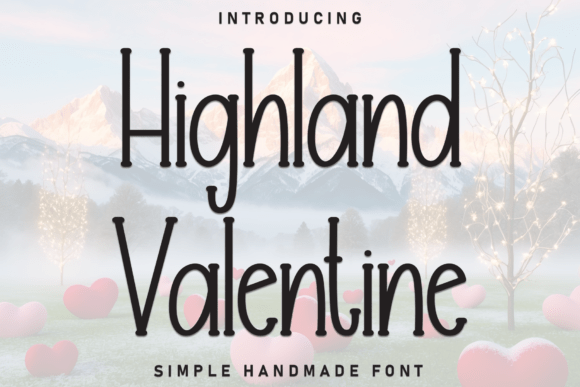
Phlox: A Display Typeface That Feels Like a Warm Invitation
Last Tuesday, I sat down to refresh the cover of a seasonal recipe ebook—a quiet project for a small-batch herbal tea brand. The original cover used a well-meaning but overused sans serif, and something felt off: the tone was friendly, the photography soft and sunlit, yet the typeface spoke in clipped, neutral tones. I opened my font library, scrolled past familiar workhorses, and paused at Phlox. Not because it was loud or flashy—but because its rounded slab-serif forms looked like they’d been drawn with care, not algorithm.
Phlox is a display typeface built for moments that matter: the first glance, the pause before reading, the subtle signal that this content is worth your attention. Its letterforms are generously proportioned—wide, softly anchored, with generous counters and smooth, almost tactile curves. The serifs aren’t sharp or rigid; they’re pillowy, confident, quietly clever. There’s no irony here, no wink or nod to trend. Just warmth, clarity, and a gentle sense of connection—like handwriting you’d trust with a handwritten note.
I set the ebook title in Phlox at 48pt on a cream background, paired with a light serif (Cormorant Garamond) for the subtitle and body text. Instantly, the hierarchy settled—not through contrast in weight or scale alone, but in *mood*. Phlox didn’t shout; it welcomed. Readers lingered longer on the cover preview in my email test. One colleague said, “It feels like the kind of font that would remember your name.” That’s the editorial magic of Phlox: it carries personality without sacrificing legibility, playfulness without undermining seriousness.
It shines most naturally where readers need orientation and emotional resonance—blog headers, chapter openers, newsletter banners, printable planner covers, and digital magazine feature pages. In a wedding guide I recently laid out, Phlox handled names, dates, and section titles with quiet elegance: “Ceremony & Vows,” “Floral Notes,” “Getting Ready Timeline”—each phrase felt intentional, unhurried, grounded. On screen, it holds up beautifully at larger sizes—even on mobile, where its open shapes and consistent stroke rhythm prevent visual crowding. In PDF exports, it renders cleanly across devices, and in print, its robust forms translate faithfully to coated and uncoated stocks.
That said, Phlox isn’t meant for long-form body copy. It’s a display font—designed for impact, not endurance. Think of it as the voice that introduces the story, not the one that tells it. Use it for titles, pull quotes with breathing room, workshop workbook covers, coaching course module headers, or the bold headline atop a printable habit tracker. Its presence signals intention: this isn’t filler. This is curated.
Pairing Phlox thoughtfully deepens its strength. With serif body fonts—like Merriweather, Lora, or even a classic Georgia—it adds modern warmth while honoring tradition. With clean sans serifs—Inter, Poppins, or Work Sans—it creates a balanced, contemporary rhythm: Phlox brings soul; the sans brings structure. Avoid pairing it with other display or script fonts unless there’s clear conceptual harmony—two strong personalities need space to breathe.
Before using Phlox in client work or digital products, I always check what’s included: multiple weights (Light, Regular, Bold), true italics (not skewed), stylistic alternates for letters like ‘a’ and ‘g’, and ligatures that soften transitions between ‘f’ and ‘i’ or ‘f’ and ‘l’. I also verify multilingual support—especially if the project includes accented characters common in French, Spanish, or German—and confirm licensing covers commercial use: ebooks, Canva templates, paid newsletters, printable planners, and client-branded PDFs. Most reputable vendors include OpenType features and web-friendly formats (WOFF2, OTF, TTF), which matters whether you’re embedding in a WordPress theme or exporting a Figma prototype.
In a lifestyle blog redesign, I used Phlox for the masthead and article titles only—never navigation or captions. The result? A stronger visual identity without sacrificing usability. Subscribers began commenting on the “calm energy” of the site—something they’d never done before. It wasn’t the color palette or layout alone. It was how the type invited them in, gently, without demanding attention.
For a digital magazine feature on slow living, Phlox anchored full-bleed spreads: “The Art of Pausing,” “What Grows in Stillness,” “A Year of Small Rituals.” Each title sat centered, with ample leading and generous margins—letting the type breathe, just as the content encouraged readers to do. No drop shadows, no outlines, no effects. Just Phlox, thoughtful spacing, and restraint. That’s where its editorial power lives: in what it doesn’t do as much as what it does.
If you're choosing a font for a creator newsletter header, a coaching workbook cover, or a seasonal printable guide, ask yourself: Does this typeface reflect the feeling I want someone to have *before* they read a single word? Phlox answers that question with sincerity. It doesn’t chase virality or mimic trends. It offers presence—rounded, grounded, and quietly memorable.
Typography, at its best, is empathy made visible. Phlox reminds me that design choices ripple outward: into reader trust, into time spent, into how deeply someone connects with your words. It’s not about being seen—it’s about being felt. And in a world of rushed scrolling and endless feeds, that kind of calm, connected clarity is rare. And worth choosing, carefully, again and again.